Self-erasure and passivity
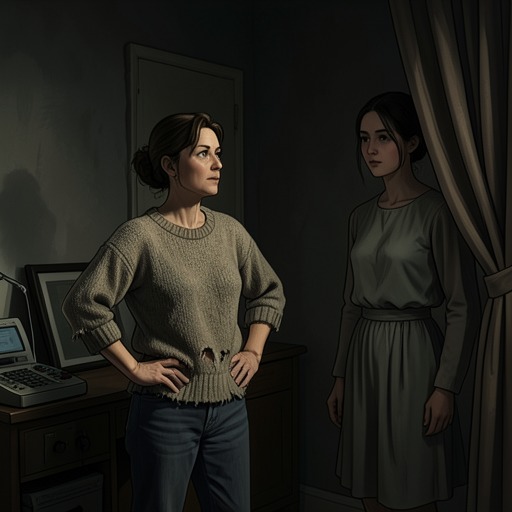
Dr. DeathSelf-erasure and passivity are the terms through which Stacy Doss tries to understand her mother Joanne Doss’s emotional absence and eventual decision to die with Eldon Mate’s help. Stacy does not regard Eldon Mate as the force that made her mother disappear; she sees him as someone who arrived after Joanne had already withdrawn from life and family. The concept therefore holds a difficult tension: Joanne’s withdrawal appears to Stacy as a negation of agency, while the decision to die remains, in Stacy’s account and in Alex Delaware’s response, Joanne’s own.
The Meaning of Self-Erasure
In a therapy session with Alex Delaware, Stacy describes her mother’s response to family life as having no opinions and turning herself into nothing. The language makes passivity more than quietness or reticence: it suggests a person becoming so difficult to reach that her presence feels almost absent. Stacy relates this description directly to Joanne’s decision. At first, the news of what her mother had done shocked her; after that shock passed, she understood it as the culmination of a pattern she calls ultimate passivity.
Stacy’s account does not begin with the moment of death. She says Joanne had already rubbed herself out by the time Eldon Mate became involved. In that view, the assisted death did not create the underlying absence; it gave a final form to a withdrawal already underway. Stacy also rejects the public account that makes Eldon Mate seem to be the active agent. She argues that, for someone like her mother, he did nothing because there was nothing left for him to do. This is Stacy’s interpretation of Joanne’s state, not a claim that the family had understood it while Joanne was alive.
A Family That Existed Without Connecting
Stacy widens the explanation beyond her mother’s illness. She tells Alex Delaware that she had not been honest in earlier sessions about how troubled her family was: its members lived together, she says, but did not connect. She locates this distance before Joanne became sick. Although Stacy supposes that she and her mother must have had enjoyable times when she was young, she cannot remember them. Joanne had done what a good mother was expected to do, but Stacy could not grasp or hold onto her emotionally; she compares her mother to air.
That contrast complicates any simple account of a sudden disappearance. Joanne could perform the recognizable duties of motherhood while remaining, in Stacy’s memory, unreachable. The family’s lack of communication was not merely a consequence of the illness or the dispute over Eldon Mate. Stacy describes it as a longer condition, one that left her without a clear store of remembered closeness to set against her mother’s final decision. Her uncertainty is visible in the way she struggles to express what the relationship lacked: the emotional distance is clear to her, even when its history is hard to name.
Choice, Blame, and the Role of Eldon Mate
The family’s explanation of Joanne’s death had centered on Eldon Mate. Stacy says her father and Eric Doss treated him as a monster, making him the focus of a household argument. She disputes that account because it transfers responsibility away from Joanne. When Alex Delaware asks whether the decision was ultimately her mother’s, he answers that it was. Stacy then describes Eldon Mate as a vehicle her mother could have replaced with someone else, and understands Joanne’s death as a decision to leave without saying goodbye.
This distinction is central to the concept. Stacy’s language of self-erasure might suggest that Joanne had ceased to act, but Stacy also insists that her mother made a choice. Her anger and grief gather around that unresolved combination: Joanne seemed to have withdrawn long before her death, yet still made a decision whose consequences fell on the family. Stacy interprets the choice as evidence that her mother did not care enough to keep trying. The account presents this as Stacy’s painful judgment, not as an independently established motive for Joanne.
The absence of warning makes that judgment more immediate. Stacy recalls that on the morning she went to school, Joanne called her in to say hello and told her she looked pretty. Stacy remembers no unusual appearance or goodbye in the encounter. In retrospect, the ordinary exchange sits beside Stacy’s belief that her mother had already erased herself. The gap between the apparently familiar morning and the news of Joanne’s decision helps explain why Stacy can say both that she had no warning and that, after the initial shock, the outcome made sense to her.
Illness, Appearance, and Contradictory Memories
Stacy’s account also links Joanne’s decline to the family’s attention to bodies and appearance. She recalls that pain was present, but that Joanne kept eating and gained weight, in contrast to the figure she had once had. Physical appearance had been a conspicuous subject in the household: Stacy remembers both parents wearing revealing bathing suits and recalls her father talking about how they seemed not to age, as if they would always remain children.
One memory gives that image a social setting. At a swimming party hosted with the Manitow family, Stacy remembers Joanne and her father groping one another in the pool while Bob Manitow stared. The scene embarrassed Stacy, though she also recognizes that her parents’ attraction to each other might have seemed like a positive sign. That memory of visible desire and youthful self-presentation stands in stark contrast to her description of Joanne’s later physical change. Stacy says that her mother then inflated herself; the remembered body becomes part of the loss she is trying to interpret, without explaining the cause of Joanne’s illness or decline.
Grief and the Limits of the Explanation
Stacy cannot settle her feelings into a single account of Joanne. She says that her mother’s decision is over and wonders whether she must keep thinking of the good memories because Joanne was a good mother. The qualification matters: Stacy does not erase the good in order to condemn her mother, but neither can the category of a good mother resolve the pain of a death without warning. Her crossed arms and drawn-forward shoulders, which make her appear bound, accompany an effort to stop speaking; she takes a step, plants her foot heavily, and fights back tears. The physical gestures register strain where her explanation falters.
The session’s movement also shows how the idea of passivity functions as a fragile form of understanding rather than a complete answer. Stacy begins by describing Joanne as having become nothing, then insists that the final decision belonged to Joanne, and ends by reaching for good memories she cannot confidently retrieve. Her account makes self-erasure legible through its repetitions: silence, lack of connection, the ordinary morning with no goodbye, and the family’s difficulty accepting responsibility. It does not resolve the contradiction between withdrawal and choice. Instead, that contradiction is the emotional core of Stacy’s effort to understand her mother’s death.